Lichtblauwe moerbeizijde in zachte golven

Sleeping with wet hair: is it bad for your hair?

You showered in the evening and can't face the hair dryer. Does it matter? One night with wet hair is no disaster, but don't make it a habit. Here is why, and what to do when you go to bed with wet hair anyway.

In short

  • Wet hair is more fragile. It stretches more easily and breaks sooner, and at night it rubs against your pillowcase for hours.
  • It dries in the shape you sleep in: with kinks, a flat side and frizz.
  • Let your hair dry first, in the air or with the hair dryer on a low or cool setting.
  • Tie it up loosely in a loose plait or bun, with a silk scrunchie instead of a tight hair tie.
  • Choose a smooth pillowcase: silk creates less friction than cotton.

Is it bad to sleep with wet hair?

Once is nothing to worry about. Do it often, though, and your hair will show it. Dermatologist Shilpi Khetarpal of the US hospital Cleveland Clinic explains that hair is more fragile when it is wet: it stretches more readily and snaps sooner. And because you keep turning over at night, that wet hair rubs against your pillowcase. That friction can make it break.

Two practical drawbacks come on top of that:

  • Your hair dries in the shape you sleep in. You wake up with kinks, a flat side and more frizz, and still have to style it in the morning.
  • Your pillow stays damp. Under your head, a wet pillowcase gets little chance to dry overnight. If you often sleep with wet hair, wash your pillowcase more often.

The dermatologist's advice is therefore simple: ideally, let your hair air-dry before you go to sleep. If it needs to be quicker, use the hair dryer on a low or cool setting and avoid high heat.

Why your pillowcase matters

On cotton

  • A rough surface that tugs at your hair with every movement
  • Wet hair rubs against the fabric all night
  • More tangles and frizz on the side you slept on

On silk

  • Your hair glides along as you turn over
  • Less friction than cotton, so less tugging at fragile hair
  • Fewer tangles and less frizz when you wake up

According to the same dermatologist, a silk or satin pillowcase instead of cotton can help. Satin is not the same as silk, though: it is a way of weaving, usually with polyester. We explain the difference in satin or silk: which is better?
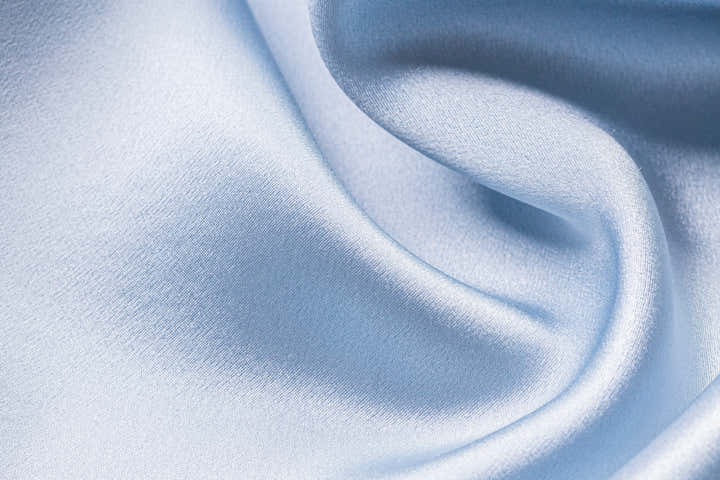
Light blue mulberry silk in soft waves

Silk is not a towel

A silk pillowcase does not dry your hair or make it stronger. So even on silk, it is better not to lie down with dripping wet hair: the pillowcase gets wet and your hair still dries in the shape you sleep in. Let it get as dry as you can first. After that it glides smoothly on silk, and the pillowcase itself dries again quickly.

Going to bed with wet hair anyway? Here's how

  1. Wash earlier in the eveningIf you shower at night, do it a few hours before bedtime. That gives your hair time to air-dry.
  2. Wrap, don't rubDon't rub your hair dry; wrap it in a towel that soaks up the water. That is what the American Academy of Dermatology (AAD) recommends.
  3. Dry on low or coolIf it needs to be quicker, use the hair dryer on a low or cool setting until your hair is almost dry. High heat does more harm than good.
  4. Conditioner after every washThe AAD recommends conditioner after every shampoo. It makes your hair easier to detangle, so you pull on it less.
  5. Comb gentlyLet straight hair dry a little before you comb it; curls, on the other hand, are best combed while still damp. Either way, use a wide-tooth comb.
  6. Tie it up looselyA loose plait or a loose bun on top of your head keeps your hair together, so it rubs less against your pillow. The AAD advises against pulling hair back tightly, so use a silk scrunchie rather than a thin hair tie.

What to do for your hair type

  • CurlsCurls dry in the shape you sleep in. A loose pineapple with a large scrunchie keeps them together. You will find more tips in a silk pillowcase for your hair and curls.
  • Long hairLong hair dries the slowest and tangles the fastest at night, especially at the nape of your neck. A loose plait keeps it together.
  • Fine or straight hairFine hair soon lies flat after a night with wet roots. Above all, dry the roots on a low setting.
  • Short hairShort hair dries quickly. A few minutes with the hair dryer on a low setting is usually enough.

Does a silk pillowcase help?

Yes, as an addition to dry hair. Silk is smooth, so your hair glides along when you turn over instead of rubbing against the fabric. That way you wake up with fewer tangles and less frizz. It will not make your hair stronger or healthier: the difference lies in less friction during the night.

  • 22 momme
  • 100% mulberry silk
  • Grade 6A
  • Silk on both sides
  • Hidden zip
  • OEKO-TEX® Standard 100

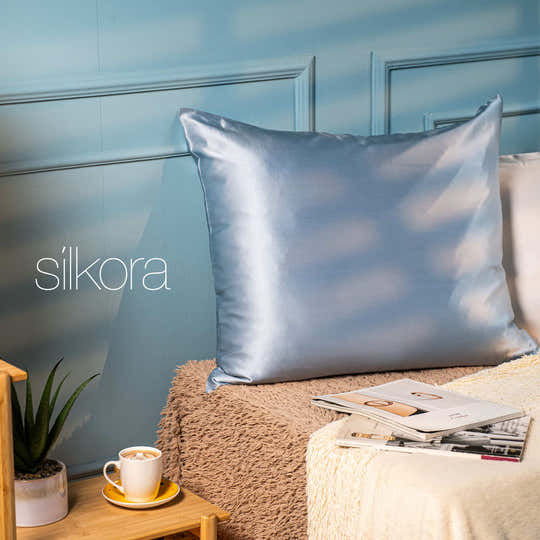
Our pillowcases are made from 22 momme mulberry silk in Grade 6A, with an OEKO-TEX® Standard 100 certificate. The front and back are both silk, and the pillowcase closes with a hidden zip. You can choose from 60x70, 50x70 or 40x80 cm. Browse our silk pillowcases.
Frequently asked questions

Is it bad to sleep with wet hair?

Once does no harm, but don't make it a habit. Wet hair is more fragile, and the friction against your pillowcase can make it break. So let your hair dry first, in the air or with the hair dryer on a low or cool setting.

Why shouldn't you sleep with wet hair?

Because wet hair stretches and breaks more easily, because it dries in the shape you sleep in, and because your pillow stays damp all night.

Is sleeping with wet hair bad for curls?

Curls suffer the most: they dry flat or tangled on the side you sleep on. Let them dry first, or wear them in a loose pineapple with a large silk scrunchie.

Can you sleep on a silk pillowcase with wet hair?

Preferably not with dripping wet hair: the silk gets wet too, and your hair still dries in the shape you sleep in. Once your hair is almost dry, silk is a good choice, because it rubs less than cotton. How to wash silk afterwards is explained in how to wash a silk pillowcase.

Is it better to wash your hair at night or in the morning?

For your hair it makes little difference, as long as it is dry when you go to sleep. If you wash it in the evening, do it a few hours before bedtime.

Sources: Cleveland Clinic, "Should you avoid going to bed with wet hair?" (8 September 2025); American Academy of Dermatology, "10 hair care habits that can damage your hair".

Dry hair and a smooth pillowcase: less rubbing at night. Choose from three sizes and nine colours.

Choose your silk pillowcase

Back to blog