How to Wash a Silk Pillowcase
Share
A silk pillowcase goes in the wash more often than any other silk item in your home: about once a week. With a fixed routine it’s done in no time, and the fabric stays smooth and keeps its sheen.
Below you’ll find that routine step by step, why each step matters and which mistakes wear a pillowcase out fastest. Washing a sleep mask or scrunchies too, or looking for help with stains and storage? Then see our page on how to wash and care for silk.
The wash at a glance
- Zip closed, inside out and into a laundry bag.
- Silk or delicate cycle, at 30 °C or colder, with a spin of 400 rpm at most.
- A little silk detergent and no fabric softener.
- Out of the machine straight away and hung up; the tumble dryer stays shut.
Why silk can’t go in with your ordinary bedding
Sheets and duvet covers usually go into the machine together at 40 or 60 degrees, with an ordinary detergent. That’s fine for cotton, but silk doesn’t cope well with it, for three reasons.
- Warm waterWarm water can make silk shrink.
- EnzymesThe enzymes in an ordinary detergent break down protein, and protein is exactly what silk is made of.
- A full drumIn a full drum, the silk rubs against buttons, zips and rough fabrics.
Step by step: your pillowcase in the washing machine
For a pillowcase, the machine is the easiest way. Follow these steps in order:
- Check for stains firstTreat make-up, cream or a blood stain before the wash, because afterwards they’re harder to get out. You can read how under removing stains.
- Close the zipOpen teeth can catch on the silk while the drum turns.
- Turn the pillowcase inside outThat way the outside, where your face lies, doesn’t rub against the laundry bag and the drum.
- Use a laundry bag made of fine fabricOne or two pillowcases per bag is enough: the bag protects the silk, and the water still needs to flow through it easily.
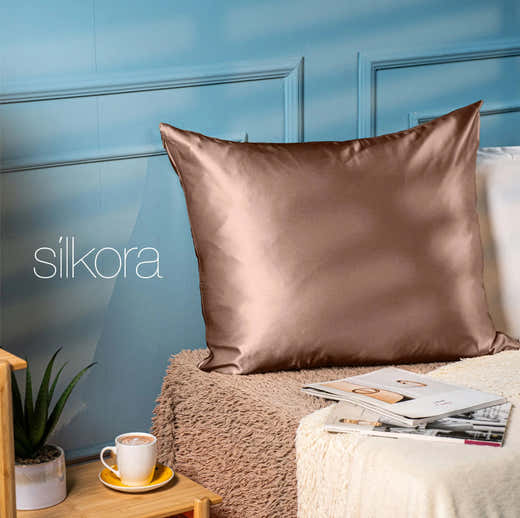
- Wash it only with delicatesA second silk pillowcase can go in too, as can other delicate items. Keep a dark colour, such as Chocolate, apart from light colours.
- Go easy on the detergentA small amount of pH-neutral detergent for silk or wool is enough. Leave out the fabric softener: silk is smooth by nature.
- Choose the silk cycle, at 30 °C at mostA delicate cycle is a good alternative. If your machine has neither, a wool cycle works too, as long as the temperature doesn’t go above 30 °C.
- Set the spin to 400 rpm or lessA faster spin presses deep creases into the fabric, and silk dries quickly without it anyway.
- Take it out of the machine straight awayA wet pillowcase that sits in the machine for hours gets creases that are hard to get out afterwards.

After washing: drying without creases
Take the pillowcase out of the laundry bag, turn it right side out again and give it one gentle shake. Then:
- Still dripping? Roll it up in a dry towel and press on it. Twisting or wringing only makes deep folds.
- Pull it into shape. Lay the pillowcase flat, smooth it with your hands and straighten the seams. Whatever you smooth out by hand now, you won’t have to do with the iron later.
- Hang it up flat on a drying rack or over a rail, out of strong sun. Leave out the clothes pegs, because they can leave marks in the silk.
- No heat. The radiator and the tumble dryer are too hot for silk, even for a short cycle on a low setting.
- Put it back on your pillow only when it’s completely dry, at the seams and the zip too. Moisture that gets into the pillow soon starts to smell musty.
If you hang the pillowcase up in the morning, it can usually go back on your pillow in the evening. Don’t want to wait? Keep a second pillowcase ready. After these steps ironing is rarely needed; if you want to iron anyway, first read how to iron silk safely.
Seven common washing mistakes
Most damage doesn’t happen all at once, but through habits that do cotton no harm.
When washing
- Washing it with the sheets. Your bedding can go in at 60 degrees, your pillowcase can’t. Give it a wash of its own, even if it’s the only item.
- An ordinary detergent ‘just this once’. Even a single wash with enzymes costs the fibre something. If you’re out of silk or wool detergent, it’s better to wait with washing.
- Extra detergent for extra clean. More detergent doesn’t make the pillowcase any cleaner. Whatever doesn’t rinse out stays behind in the fabric and makes it stiff.
- Waiting too long. Sweat, skin oil and cream build up in the fabric. The longer they stay, the harder they are to get out, and on light colours they show as a yellow tinge.
With stains, drying and ironing
- Bleaching or scrubbing. Bleach and stain remover attack silk, and scrubbing roughens the surface. A smooth pillowcase is exactly what you want to keep.
- ‘Just briefly’ in the tumble dryer. The pillowcase can shrink and then fits your pillow less well.
- Ironing on the cotton setting. An iron that’s too hot can discolour silk or leave a shiny patch. Use the silk setting, the lowest setting on your iron.
Frequently asked questions
How do you wash a satin pillowcase?
Check the care label first, because satin only tells you how the fabric is woven. A polyester satin pillowcase can usually be washed warmer than silk; the label tells you how warm. If the pillowcase is silk satin, wash it as described in this article. You can read about the difference between the two in satin pillowcase or silk pillowcase: which is better?
Can I also wash my silk pillowcase by hand?
Yes, and it’s even a little gentler on the fabric. Do use a roomy basin or a clean bath, because a pillowcase needs to move freely through the water. The steps for a hand wash are on our care page, under washing silk.
My light pillowcase has turned yellowish. What now?
Before the next wash, soak it for half an hour in lukewarm water with a little silk detergent dissolved in it. Then wash it as usual. An old yellow tinge doesn’t always come out completely, and bleach only makes it worse. Prevention works better: wash it every week and turn the pillowcase over now and then.
No laundry bag at home?
Use a clean cotton pillowcase as a laundry bag. Put the silk pillowcase inside and knot the opening shut. The cotton then protects the silk from the drum, just like a real laundry bag.
With this routine your pillowcase stays beautiful for a long time. You’ll find a second pillowcase to alternate with, or one in another size or colour, among our silk pillowcases.