

Power nap: how long is ideal and how do you do it right?
A power nap is a short daytime nap to clear your head. It does not replace your night's sleep, but it can help you through a dip. Whether a nap works depends on three things: how long you sleep, when you take it and where you lie down.
How long should a power nap last?
Short. Most advice comes down to 10 to 20 minutes (Mayo Clinic) and no longer than half an hour (Sleep Foundation).
An Australian study showed why. Twenty-four young, healthy sleepers slept less for one night and the next afternoon took a nap of different lengths, or none. A 5-minute nap did little. A 10-minute nap worked best of all the lengths. After 30 minutes, the participants first felt groggier for a while before the nap helped (Brooks and Lack, 2006). It was a small group, but it matches what sleep experts advise.
Why longer is not better: the longer you sleep, the deeper you go. If you wake up from deep sleep, you feel groggy at first. This is called sleep inertia. So give yourself a moment before you do something that needs you to be sharp, such as driving (Mayo Clinic).
When should you take a power nap?
The best moment is early in the afternoon. Many people have a dip then, especially after lunch. Ideally nap before 3 p.m., because a nap later in the day can make it harder to fall asleep in the evening (Mayo Clinic, Sleep Foundation).
How to take a power nap
Why a sleep mask helps with a power nap
During the day it is hardly ever really dark. A mask makes it dark wherever you are: on the sofa, at the office or on the go.
Silkora's silk sleep mask is wide and softly padded, with a cut-out for your nose, so little light gets in. It is silk on both sides, and the elastic strap closes with Velcro at the back of your head. That means you can also lie on your side with it. Which mask suits you is explained in which sleep mask should you choose? What research says about sleeping with a mask is in the benefits of a silk sleep mask.
Coffee and a power nap: does a "coffee nap" work?
Caffeine only starts to work after about twenty to thirty minutes (DAK, Sleep Foundation). If you drink a small cup of coffee just before your nap, you wake up just as it starts to work.
In a driving simulator this worked better than coffee alone. Sleepy drivers had coffee plus a short nap during a half-hour break, and afterwards made far fewer driving errors than with coffee alone (Reyner and Horne, 1997).
Only do this early in the afternoon, because coffee later in the day can disturb your night's sleep. If you are sensitive to caffeine, skip it. And if you feel sleepy at the wheel, stop somewhere safe.
Sleeping during the day after a night shift
If you work at night, your daytime sleep is not a power nap but your main sleep. Make the bedroom as dark and quiet as possible: blackout curtains or a sleep mask, earplugs, and your phone on silent. Agree with the people you live with that you will not be disturbed.
When is it better not to take a power nap?
If you sleep badly at night, it is better not to sleep during the day. Daytime sleep is one of the habits that can make poor sleep worse. Research on naps is not clear-cut either: some studies find benefits, others do not.
Sources: Brooks and Lack, "A brief afternoon nap following nocturnal sleep restriction: which nap duration is most recuperative?", Sleep 2006; Reyner and Horne, "Suppression of sleepiness in drivers: combination of caffeine with a short nap", Psychophysiology 1997; Mayo Clinic, "Napping: Do's and don'ts for healthy adults"; Sleep Foundation, "Napping"; DAK, "Powernap".
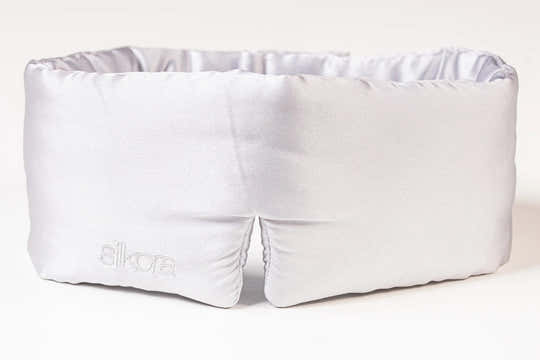 Silk sleep masks22 momme mulberry silk on both sides, in five colours and in a gift box.
 Silk pillowcasesSmooth and cool, also for a nap on the sofa.